From paper forms to a digital conference
SCIRA had been running a well-regarded annual literacy conference for years. The 2008 financial crisis changed the economics. We helped them rebuild the infrastructure around a conference that had never stopped being worth attending.

A good conference held back by its own infrastructure
SCIRA runs an annual literacy conference, self-funded through registration fees, that had earned a strong reputation for quality. When the 2008 financial crisis hit, attendance dropped sharply. School districts stopped sending groups of teachers. Individual educators couldn’t fund their own attendance. The budget got thin.
The problem wasn’t the conference itself. The conference was good. The problem was the infrastructure around it: registration handled by mail, payments by cheque or over the phone, paper mailings, and board members trying to reach members through personal email accounts that school district spam filters were blocking entirely.
When times were good, the inefficiency was tolerable. When the margins got tight, the same systems became a genuine liability.
Every inefficiency in SCIRA’s infrastructure was invisible when registration numbers were strong. The financial crisis made the cost of each one visible, and the combination of all of them at once was unsustainable for an all-volunteer organization.
The conference itself consistently received strong feedback and outperformed peer organizations in other regions. The goal wasn’t to rebuild what SCIRA was doing. It was to remove the infrastructure friction that was preventing people from registering for something they wanted to attend.
Three systems. Each one compounding on the last.
Registration, information distribution, and email were each broken independently. Fixing them together changed what the organization was capable of.
From paper forms to a payment gateway
Every registration had previously arrived by mail and required manual processing. Payments came in by cheque or over-the-phone credit card, with processing fees to match. We moved the entire registration process online and connected it to a payment gateway. The result was immediate: fewer volunteer hours spent processing forms, lower transaction costs, and a registration experience fast enough that more people completed it. SCIRA is now on a trajectory toward 100% digital registration, with the system open year-round rather than compressed into the weeks before the conference.
Publishing details as they're confirmed, not all at once
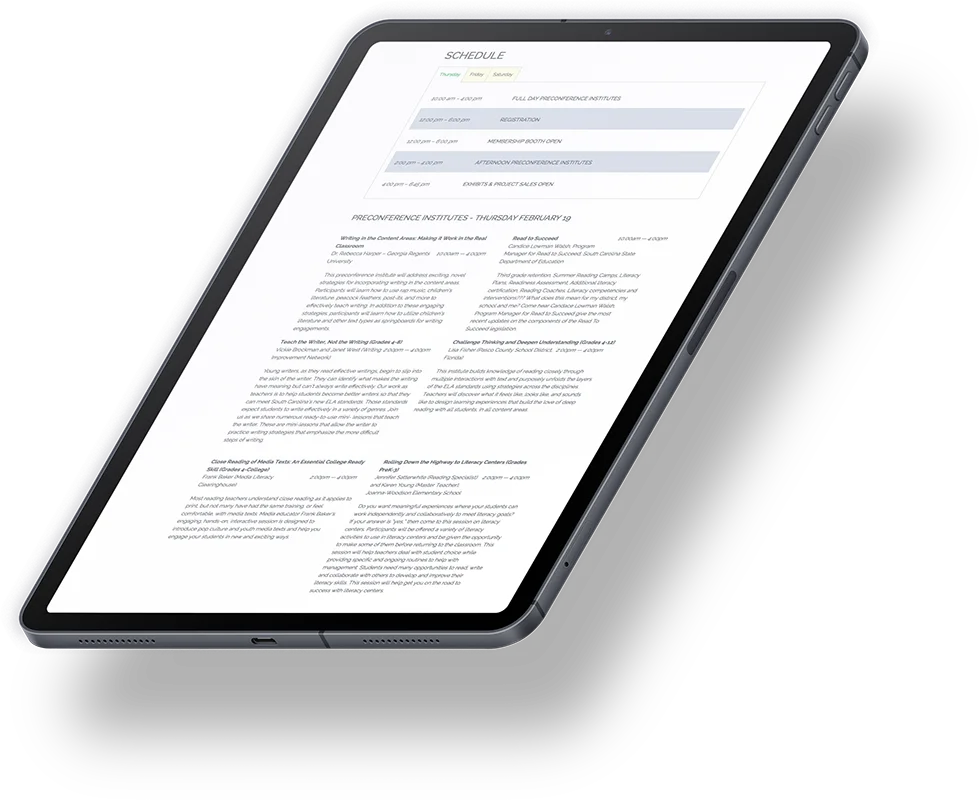
SCIRA had been relying on paper mailings to inform potential attendees, which meant every conference detail had to be finalized before anything could go out. Potential attendees waited for the full picture before deciding, which meant registrations arrived in a wave at the last minute. We built a custom CMS website that lets SCIRA publish and update conference information as it's confirmed. Attendees can follow along as the program develops and register when it works for them. We also built an automated name tag printing workflow to recover more time at the event itself.
Getting past the spam filters
Board members had been reaching members through personal email accounts. In many school districts, those accounts were being blocked entirely by spam filters, meaning SCIRA's communications weren't arriving. There was no way to know what was getting through and what wasn't. We built a complete email solution using Amazon SES: professional @scira.org addresses for every board member, proper DKIM authentication to clear district-level spam filters, and a full analytics dashboard with open rates, bounce rates, and clickthroughs. SCIRA can now segment their member list and send targeted messages to specific groups, with confirmation that the messages arrived.
What changed for SCIRA
The immediate wins were operational: fewer hours processing forms, lower fees, emails that actually arrived. The longer-term shift was structural: a conference organization that could plan earlier, communicate reliably, and spend its volunteer capacity on the conference rather than the paperwork around it.
- Moving toward 100% digital registration
- Registrations open year-round, not just the weeks before the conference
- Full email delivery visibility: open rates, bounce rates, clickthroughs
- Budget planning moved significantly earlier in the year
- Volunteer hours redirected from form processing to conference preparation
- Registrations spread across months instead of arriving all at once
We took SCIRA’s conference off paper: online registration, a payment gateway, and a schedule that publishes each session as it’s confirmed.
Explore our nonprofit web design serviceReady to fix the infrastructure around your mission?
Most organizations know what's broken. The hard part is finding time to fix it. That's what we're here for.