A literacy organization’s website that serves the people it’s about
Literacy Alberni Society had programs worth finding. Their website wasn't helping people find them. We redesigned it to serve their community, flexible enough for staff to keep current and accessible enough for the people they serve to use.
Programs the community needed: a website that wasn't helping them find it
Literacy Alberni Society had been quietly delivering valuable programs to their community for years. The problem wasn’t the quality of the work. It was visibility. Their website was outdated and incomplete, and it didn’t represent what the organization offered. For people trying to find help, it was a dead end.
The organization’s programs change throughout the year, which made a static website particularly unfit for purpose. And Literacy Alberni’s staff, like most nonprofit staff, couldn’t be calling a developer every time a program date changed or a new service was added.
The audience added another layer of complexity. Many of the people Literacy Alberni serves have limited English literacy or are navigating services in a second language. Any website designed to reach them had to be built with that reality in mind.
Literacy Alberni works with adults and families across the Alberni Valley, including people with limited literacy, limited English, and limited access to online resources. The website needed to be a real on-ramp to services, not just a placeholder.
A nonprofit with a small staff and no in-house technical capacity can’t maintain a website that requires a developer. The solution had to work for the organization as it actually exists, not as it might exist with more resources.
A website staff can update themselves
The goal wasn't just a better-looking site. It was a site the organization could own, keeping it current and useful without outside help.
A site that reflects what the organization does
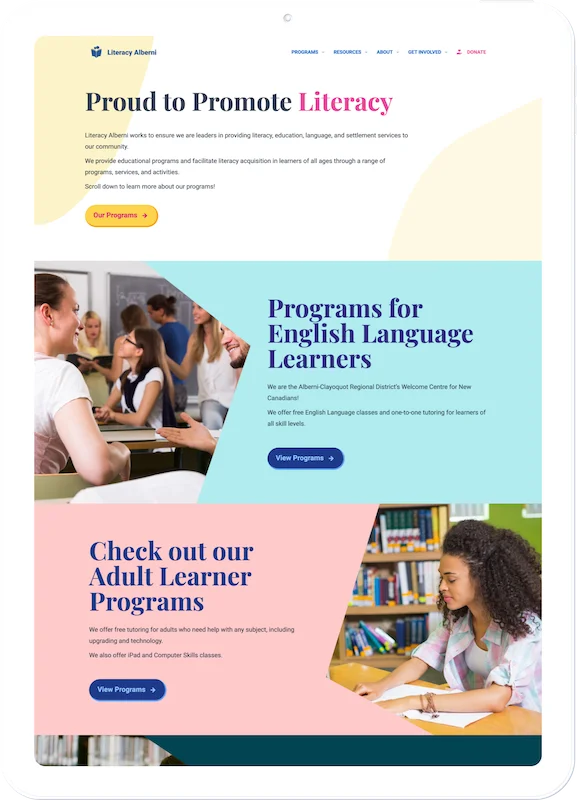
Literacy Alberni's previous website was incomplete and outdated, and it didn't represent the full scope of their programs or make it easy for community members to understand what services were available and how to access them. We rebuilt it from the ground up: a site that made clear what programs were available and how to reach them. Content was written and organized to be genuinely useful to people who were looking for help, not just to describe the organization to funders.
Built to stay current without developer help
Literacy Alberni's programs change throughout the year. A static website would have started falling out of date immediately. We implemented a flexible CMS that allows staff to update programs, events, and service offerings on their own, without calling a developer or risking breaking the layout. The goal was a website that the organization could own and maintain, so it could remain a reliable resource for the community rather than becoming another outdated page.
Reaching a community that includes people with limited literacy
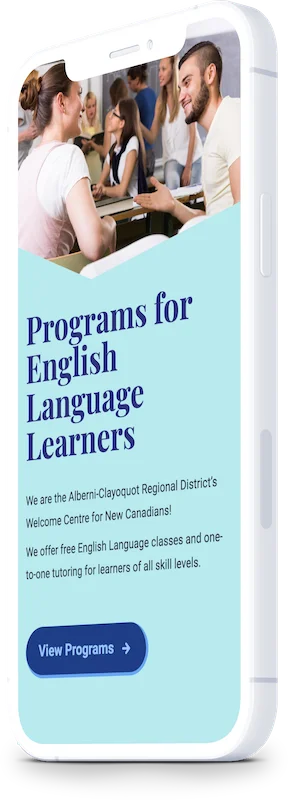
Literacy Alberni served people across a wide range of reading levels and language backgrounds, including individuals with limited English literacy. We designed the site with that audience in mind: user-friendly navigation, content written at appropriate reading levels, and multiple streamlined contact forms to lower the barrier to reaching out. We also provided staff training on managing email outreach programs and helped develop communication strategies across email, social media, and print, so community members who weren’t finding the website could still be reached.
What changed for Literacy Alberni
A website isn’t a success because it looks good at launch. It’s a success if, two years later, the organization is still maintaining it themselves and the community is using it. That was the standard we built to.
- Community members can find and access services online
- Staff manage and update content without developer assistance
- Multiple communication channels actively supported
- Content written at appropriate reading levels for a diverse audience
- Streamlined forms lower the barrier to reaching out for help
- Website accurately reflects the organization's full program range
We built Literacy Alberni a website their staff keep current without a developer, designed to reach a community that includes people with limited literacy.
Explore our nonprofit web design serviceNeed a website your team can update themselves?
We build sites for organizations as they are, not as they might be with more resources. Start with a conversation.